A Neuro-interactive Virtual Reality Experience using Electroencephalogram (EEG) for Mindfulness.
Jamie Ngoc Dinh, You-Jin Kim, and Myungin Lee. 2024. FractalBrain: A Neuro-interactive Virtual Reality Experience using Electroencephalogram (EEG) for Mindfulness. In Extended Abstracts of the CHI Conference on Human Factors in Computing Systems (CHI EA ’24). Association for Computing Machinery, New York, NY, USA, Article 406, 1–4.
I presented the initial research question to my advisor, and we jointly developed the overall project framework. I carried out the technical implementation, including the development of the VR experience and its real-time adaptation to EEG signals, and led the pilot studies.
Technical tools
Meta Quest 2
EEG: Emotiv Epoc X
Unity3D
Creative coding: C#, Shader
Play Video
Mindfulness is widely used to improve psychological well-being and reduce stress-related symptoms. With recent advances in EEG and VR technology, new ways of supporting meditative experiences have emerged, though most rely on natural scenes and static visuals. Research on fractals suggests they may offer a different approach, as fractal patterns have been shown to promote relaxation and meditative states.
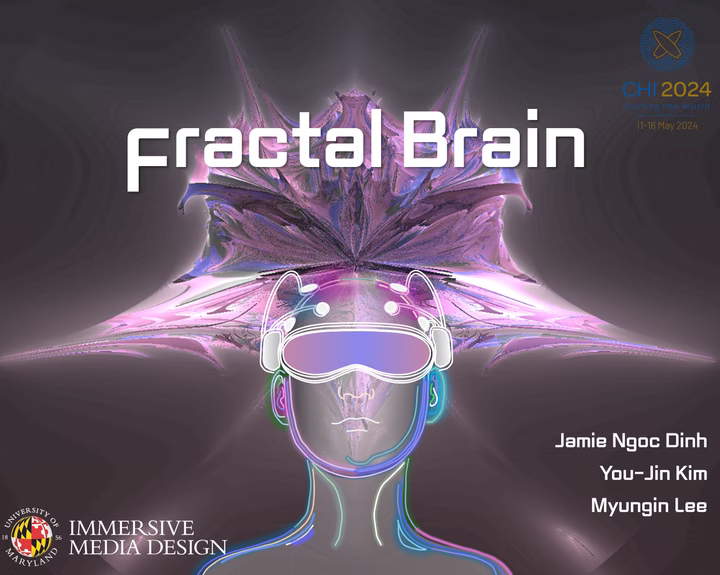
FractalBrain is an interactive system built around an audiovisual fractal with repeating geometric patterns known to support meditative states. It combines a surreal virtual reality (VR) experience with an electroencephalogram (EEG) interface. As users immerse themselves in a continuously evolving, fractal-inspired environment, their EEG signals are analyzed and mapped into the VR experience. These signals adjust the audiovisual elements in real time, creating a personalized experience for each user. Feedback from pilot studies suggests that FractalBrain has the potential to support mindfulness and improve attention.
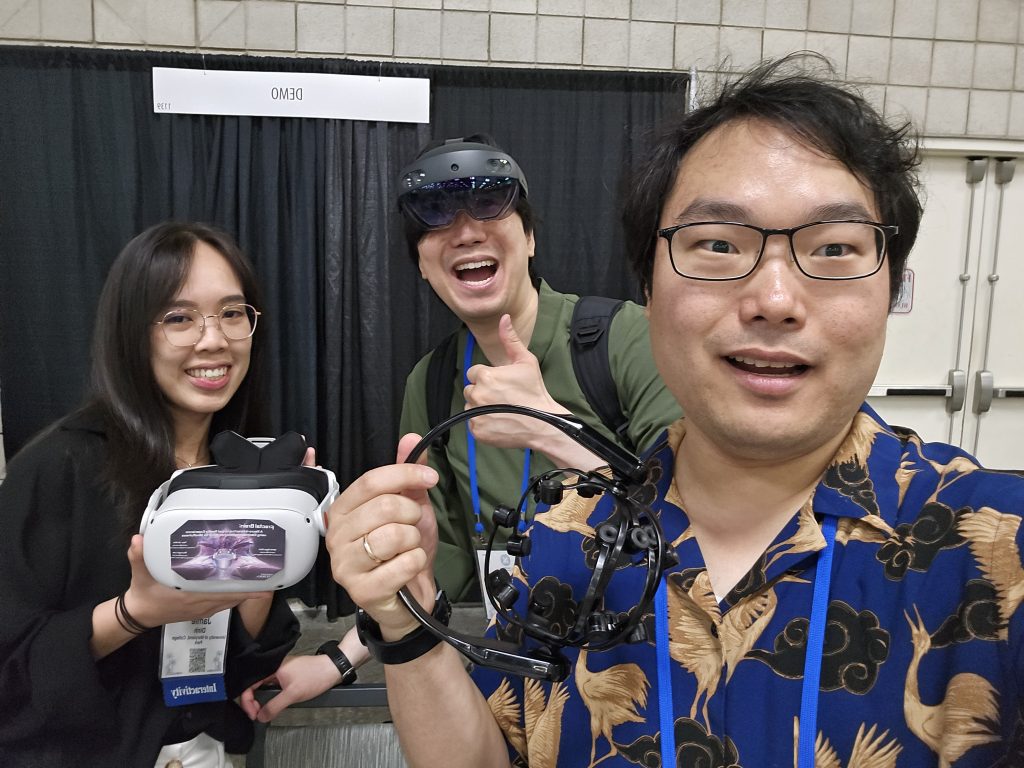
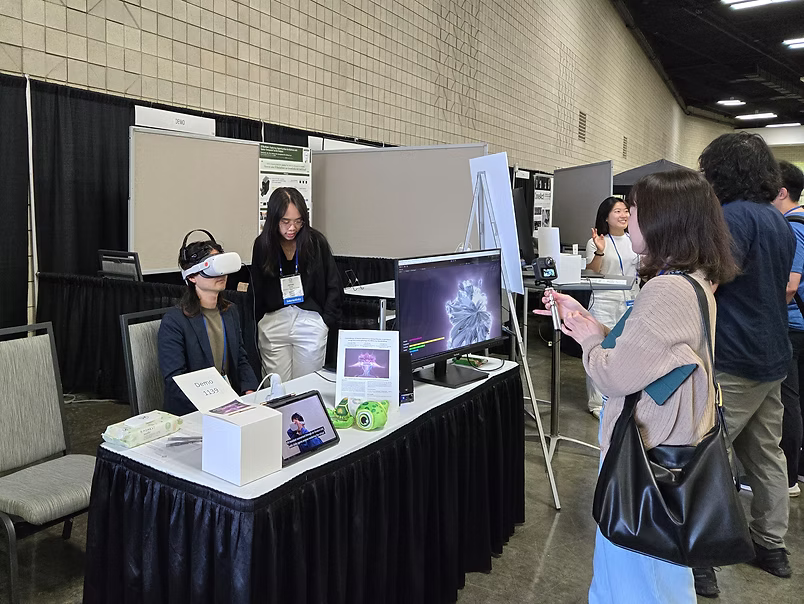
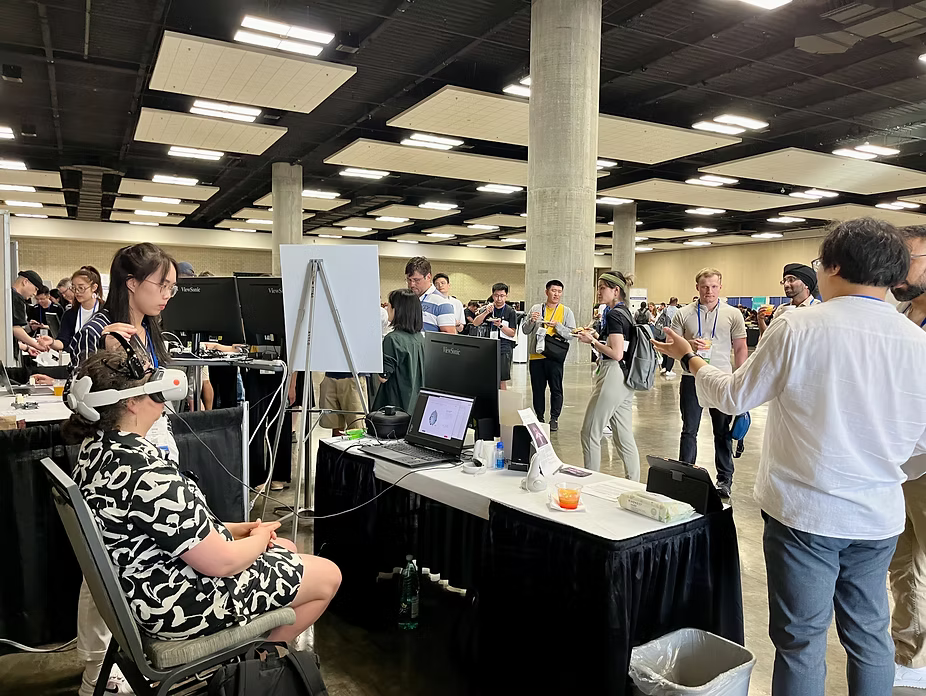
This work was presented at CHI 24 Interactivity in Hawai‘i, USA.